If you’ve worked in the NHS or a GP practice(1), then there’s a good chance you learnt how processes involving patients or information about their care really work in practice. There is often a difference between how things are imagined to work and how they actually work (2). But working in healthcare and talking to colleagues in different departments and organisations helps you build up a detailed picture of how things really work. Clever people use this learning to help them excel at their job.
You can also use this learning to get some control over your own ‘patient journey’ or that of a loved one. For example, you can check that the GP’s referral letter to the hospital matches what you told them; you can google the name of the consultant you’ve been referred to and then check their ‘interests’ are relevant to your condition; you can check your GP test results to see whether they are ‘Normal’; you can check the consultant has written to the GP with the details of what he needs to prescribe. In short, you can ensure the NHS works as it should for you and that your care is ‘joined up’.
But what happens when your mother moves into a care home because she has dementia? If you want to ensure she receives joined-up care, then you need to manage – or at least be involved in – her interactions with the NHS from within the care home. This is complicated because separate organisations are involved. She will have a GP and see a practice nurse, she may be referred or admitted to a hospital, may be visited by a community nurse who works for an NHS trust, and is being cared for by a private-sector care home, funded by a Local Authority.
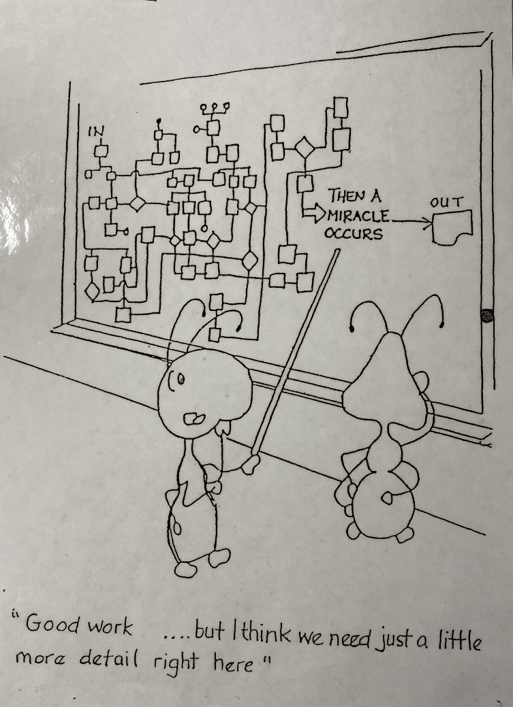
Here are some lessons learnt. Each care home is generally linked to one GP practice, and so residents are encouraged to register with that practice. You may therefore be asked to allow your mother to move from her existing GP practice to the linked practice. A few years ago, the relevant explanatory document was ‘Network Contract Directed Enhanced Service: guidance for 2023/24 in England’ (3). Para 9.3.8 covers ‘supporting re-registration of patients’ when they move into care home. It goes on to say that the benefits of GP re-registration will be explained to patients or the person who has Power of Attorney (PoA).
I received no explanation, and with hindsight I could have visited the GP practice to ask how their link to the care home would work for my mother. I was surprised when a carer told me he would be ringing the practice at 08:30 the following day and joining the queue to request an appointment for a resident; I had assumed there would be a better system given the link between care home and practice. I subsequently discovered from the care home staff that the nurses I saw visiting the home did not work for the practice but were ‘community’ or ‘district’ matrons. I knew they would therefore be employed by the local foundation trust. I queried one of them and she told me that the matrons deal with ‘acute’ issues while the practices cover ‘chronic’ conditions.
I already had access to my mother’s online GP record because this had been arranged a few years previously with her old practice – before her dementia diagnosis. This access carried over when she was re-registered, so I could see details of the new GP practice’s involvement. But I couldn’t see details of the care provided by the matrons. Their manager told me that although both the matrons and the GP staff used the same computer system, I would only be able to see the matrons’ contacts with my mother if the GP practice were to ‘copy’ them into the GP record. Unfortunately, the practice didn’t do this.
I realised that what I could see in the GP record was very limited anyway and so I requested ‘full clinical access’. The GP staff didn’t know how to grant this, but I persevered and eventually found someone in the practice who knew how to do it. It subsequently turned out that this access was essential: a few months later I was able to read a hospital discharge letter (which had gone to the care home) and be clear that the reason my mother’s ‘hip fracture’ was not being treated wasn’t because she had dementia, but because it was in fact a ‘rami fracture’ which does not require surgery.
A particular issue arose concerning the labelling of urine samples taken in the care home. If these are not correctly labelled with the patient’s name, date of birth and NHS number then they are likely to be rejected by the hospital laboratory. My access to the GP record meant I could see the hospital pathology lab’s rejection of my mother’s sample. I went to the care home and told the senior carer about the rejection; a second sample was sent. I checked and after two days it was also rejected. A third sample was accepted and reported on: the diagnosis was E.coli. This explained why my mother was in so much pain. The samples were rejected for ‘patient safety’ reasons, to minimise the risk of results being linked to the wrong patient. But surely there is also a ‘patient safety’ issue when a patient is in pain and undiagnosed for 12 days longer than necessary? If I hadn’t had access to the GP record and chased up the tests then she would have been in pain longer and likely have become an emergency admission.
How to ensure that a urine sample is not rejected is an ongoing issue in the NHS. All pathology labs will have procedures to enable identification of the correct patient (4). With hindsight I could have gone to the GP practice to request labels be printed for me to take back to the care home to label the sample with all the necessary details. Or should correct labelling of samples from within the care home be the responsibility of its linked GP practice?
Healthcare delivery processes are ever-changing because new techniques are implemented to improve outcomes, or to treat more patients with the same resources, and so processes change. You need to always check that your understanding of these processes is up to date. What I have written above may not be up to date, but the underlying lesson hasn’t changed: talk to people you meet to understand the relevant processes in detail and use any opportunity to check your knowledge is up to date.
SUMMARY
- Recognise the complexity of the care process involving several organisations
- Get Lasting PoA and access to your parent’s GP record before they are diagnosed with dementia.
- Ensure you get full clinical access to the GP record.
- Visit the practice to ask how the GP practice exercises its responsibility for the care home patient’s health care and what they need you to do to help them.
- Meet the community matron to discuss whether an Emergency Health Care Plan (EHCP) should be agreed (5)
- Ask about labelling urine samples and whether the process works in all cases.
September 2026
References
- https://alastairbeattie.org/2022/04/27/gps-and-their-businesses-in-the-nhs/
- https://researchers.mq.edu.au/en/publications/work-as-imagined-and-work-as-done/
- https://www.england.nhs.uk/gp/investment/gp-contract/network-contract-directed-enhanced-service-des/network-contract-directed-enhanced-service-des-2023-24/
- https://www.uhs.nhs.uk/Media/UHS-website-2019/Docs/Services/Pathology/Lab-med/Specimen-Rejection.pdf
- https://northeastnorthcumbria.nhs.uk/here-to-help-you/deciding-right/deciding-right-advance-care-planning-forms/

