It seemed like a straightforward question. I had gone to see the senior midwife because someone wanted to know the number of normal deliveries. I took with me the heavy, thick-as-a brick ICD-10 Volume 1 – the so-called tabular list. “I need your help to identify the correct ICD-10 codes for a normal delivery,” I said. “But what does ‘ICD-10’ stand for?” she asked. “The International Classification of Diseases, 10th revision.” I had unintentionally lit a fuse because she exploded with “But pregnancy is not a disease!”
- ICD-101
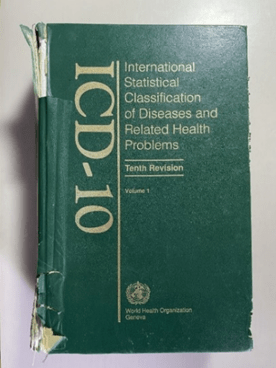
I quickly showed her the front cover of Volume 1. ‘ICD-10. International Statistical Classification of Diseases and Related Health Problems; Tenth Revision.’ 1,2 That didn’t really help because pregnancy is not a ‘health problem’ either, especially one that results in a normal delivery. I should have started with one of nursing’s heroes, Florence Nightingale, because some of the content of ICD10 has its root in the work of her and her colleague William Farr. Farr’s work as the first medical statistician to serve in the General Register Office for England and Wales after its creation (for the recording by the state of births, marriages and deaths) in 1837 led him to recognise the need for a statistical classification of diseases. His work, together with that of Marc d’Espine of Geneva, led to the first classification of causes of death which was adopted by the International Statistical Congress at its meeting in Paris in 1855. This classification has been revised eleven times since then and now covers far more than just causes of death.
Today it’s important to be clear what ‘ICD’ really stands for, not just to prevent a reoccurrence of the upset described above, but so that more people are aware that NHS clinical coders do not just record codes for diseases, which are today just a subset of what ICD-10 covers. (Ironically, given that the classification was originally developed for deaths, NHS clinical coders do not explicitly record the cause of death for a patient who dies in hospital. That is the job of the local registrar 3, using the medical certificate of cause of death.) Here is a selection of the health issues (‘problems’) covered by ICD-10 4.
| Code(s) | Description |
| F17.1 | Harmful use of tobacco |
| F51.5 | Nightmares |
| O80 | Single spontaneous delivery |
| R07.4 | Pain in throat and chest: chest pain unspecified |
| T36-50 | Poisoning by drugs, medicaments and biological substances Includes: overdose of these substances; wrong substance given or taken in error |
| T62.0 | Toxic effect of other noxious substances eaten as food: ingested mushrooms |
| T80-T88 | Complications of surgical and medical care, NEC (not elsewhere classified) |
| T80.3 | ABO incompatibility reaction: incompatible blood transfusion |
| T81.0 | Haemorrhage and haematoma complicating a procedure, NEC |
| T81.2 | Accidental puncture and laceration during a procedure, NEC |
| T81.3 | Disruption of operation wound, NEC |
| T81.4 | Infection following a procedure, NEC |
| T81.5 | Foreign body accidentally left in body cavity or operation wound following a procedure |
| T81.6 | Acute reaction to foreign substance accidentally left during a procedure |
| T81.7 | Vascular complications following a procedure, NEC |
| T90-T98 | Sequelae of injuries, of poisoning and of other consequences of external causes |
| U07.1* | COVID-19, virus identified |
| U07.2* | COVID 19, virus not identified |
| U07.3* | Personal history of COVID-19 |
| U07.5* | Multisystem inflammatory syndrome associated with COVID-19 |
| V01 | Pedestrian injured in collision with pedal cycle |
| W00 | Fall on same level involving ice and snow |
| X23 | Contact with hornets, wasps and bees |
| X33 | Victim of lightning |
| X40 | Accidental poisoning by and exposure to nonopioid analgesics, antipyretics and antirheumatics |
| X60-X84 | Intentional self-harm |
| Y00 | Assault by blunt object |
| Y40-Y84 | Complications of medical and surgical care |
| Y60 | Unintentional cut, puncture, perforation or haemorrhage during surgical and medical care |
| Y95 | Nosocomial condition |
| Z00-Z99 | Factors influencing health status and contact with health services |
| Z08.0 | Follow-up examination after surgery for malignant neoplasm (e.g. check cystoscopy) |
| Z22.3 | Carrier of other specified bacterial disease (e.g. MRSA) |
| Z43 | Attention to artificial openings (e.g. removal of urinary catheter, Z43.6) |
| Z47.0 | Follow-up care involving removal of fracture plate and other internal fixation device |
| Z59.0 | Homelessness |
| Z59.6 | Low income |
| Z71.1 | Person with feared complaint in whom no diagnosis is made: “worried well” |
| Z72.1** | Problems related to lifestyle: Tobacco use |
| Z73.1 | Accentuation of personality traits: Type A behaviour pattern |
| Z80-Z99 | Persons with potential health hazards related to family and personal history and certain conditions influencing health status |
** This code is not used in the UK where there is a coding standard that says any tobacco use is harmful and should therefore be coded to F17.1. Just because a code exists does not mean that it can be used; or it’s use may be prohibited if another code is going to be used.
This list illustrates that although the ICD is primarily designed for the classification of diseases and injuries with a formal diagnosis, not every problem or reason for coming into contact with health services can be categorized in this way. Consequently, the ICD provides for a wide variety of signs, symptoms, abnormal findings, complaints and social circumstances that may be more appropriate than a diagnosis on health-related records. The codes recorded on a patient’s admission record therefore can cover one or more of ‘diagnosis’, ‘comorbidities’, ‘reason for admission’ (for example, a normal delivery), ‘conditions treated’ (including postprocedural disorders or complications) and ‘reason for consultation’6.
2. Clinical coding in the NHS
Clinical coding is the translation of medical terminology that describes a patient’s complaint, problem, diagnosis, treatment, or other reason for seeking medical attention into codes that can then be easily tabulated, aggregated and sorted for statistical analysis in an efficient and meaningful manner. A clinical coder is the health informatics professional who undertakes the translation of the medical terminology in a patient’s hospital medical record into classification codes. The coder will be accredited (or working towards accreditation7) in this specialist field to meet a minimum standard. They provide classification expertise 8 to inform coder/clinician dialogue. Be aware that ICD-10 is not used for coding the type of surgical operation, procedure or intervention; these are covered by a separate classification known as OPCS-49.
It’s important for users of the data to know that there is not a one-to-one relationship between a diagnosis/reason for admission/condition treated/ reason for consultation and a code. The following example8 illustrates this point:
Postoperative urinary tract infection and wound infection after cholecystectomy
N39.0 Urinary tract infection, site not specified
Y83.6 Surgical operation and other surgical procedures as the cause of
abnormal reaction of the patient, or of later complication, without
mention of misadventure at the time of the procedure, removal of other
organ (partial) (total)
T81.4 Infection following a procedure, not elsewhere classified
Y83.6 Surgical operation and other surgical procedures as the cause of
abnormal reaction of the patient, or of later complication, without
mention of misadventure at the time of the procedure, removal of other
organ (partial) (total)
Code Y83.6 has been assigned twice, as it is necessary to show that the urinary tract
infection is postoperative, as well as to provide additional information to T81.4
In addition to following the ICD-10 National Clinical Coding Standards (which are required to support statistical analysis including valid comparisons within the UK and internationally), NHS clinical coders liaise regularly with clinicians. This is because a clinician’s training contains little or nothing about these classifications and how they are used. A key principle followed by the coders is that they are not allowed to interpret what is in the medical notes, for example test results. The coders will code the clinician’s documented interpretation of the test results. New consultants should ensure that they meet their hospital’s coders to discuss the work they do and to answer questions about how it will be coded so that they can subsequently obtain accurate analyses of their work. A local coding policy for use in specific circumstances may be agreed between the coder and the clinician. But the coders’ expertise is not needed just for the assignment of the correct codes; it is also vital for the selection and appropriate use of the correct codes for use in data analytics: data analysts are another group of staff who depend heavily on clinical coders.
The first thing that coders tell clinicians is that while they will code a clearly written diagnosis (including signs, symptoms, abnormal findings, complaints, and social circumstances), and diagnoses following the terms ‘probable’, ‘presumed’, ‘treat as’ and ‘Δ’, they are not allowed to code diagnoses following any of the terms ‘possible’, ‘impression’, ‘imp’, ‘likely’ or ‘?’.
In the NHS ICD-10 is used only in hospitals: staff in General Practice use ‘clinical terms’ known as ‘Read codes’ (after the GP James Read who established them) which are being replaced by SNOMED10 codes. SNOMED is also used to a varying extent in hospitals. The use of Read and SNOMED codes is known as ‘terming’. There is a clear distinction between terming, coding and grouping (the derivation of Healthcare Resource Groups for resource allocation within the NHS)11.
3. ICD-10 and the NHS
ICD-10 was approved by the World Health Assembly in 1990 and the UK was one of the first member states to implement it, with the NHS transitioning from ICD-9 to ICD-10 in 1995. The USA made the transition twenty years later, on 1st October 201512. The NHS could implement quicker because in 1995 its diagnostic data was not used for funding or payments; the USA implementation had to be done with minimum impact to their healthcare industry in which payments are based on clinical code data. ICD-10 and clinical coding became much more important and valued in the NHS after 2005, when the Payment by Results13 regime was implemented. In addition, there has been a growth in the number of published statistical measures about a trust’s performance that are derived from ICD-10 data (for example, the Summary Hospital-level Mortality Indicator or SHMI14).
4. The consultant episode, Edith Körner and six ICD-9 codes
A clinical coder must assign ICD-10 codes to diagnoses recorded in the medical record for each consultant episode within the hospital provider spell for the Admitted Patient Care (APC) Commissioning Data Set (which includes day cases). A hospital provider spell may contain several consultant episodes and the definitions for these terms are found in the NHS Data Model and Dictionary15.

The first major examination of the way the NHS collected and used its data was undertaken by a Steering Group on Health Services Information set up in 1980 by the Secretary of State for Health and Social Services. The Group’s chair was Edith Krner16, who came from Czechoslovakia to the UK as a child refugee in 1939, and its first report covered hospital data. It introduced the concept of the provider spell and the consultant episode and set the way forward for the NHS Data Model and implementation of hospital Patient Administration Systems. It specified that the patient record should contain up to six ICD-9 codes. Prior to the K
rner report, NHS Hospitals had been recording ICD codes for inpatients and day cases on paper HAA (Hospital Activity Analysis) forms. After several years the data model was amended to allow for up to 14 and then 30 ICD codes per episode. Subsequently this restriction was removed and there is now no limit to the number of codes per episode.
The following figure shows the codes recorded for one patient’s admission. The patient has been under the care of three consultants and there are ICD-10 codes recorded for each episode. The codes recorded illustrate the point that sometimes more than one code is required for a given condition. For example, in the first episode the second and third codes together mean that the sepsis (A419) was hospital acquired (Y95X, Nosocomial condition); the fourth and fifth codes together mean that the bronchopneumonia (J180) was an abnormal reaction caused by a surgical operation or other surgical procedure (Y831, Surgical operation with implant of artificial device); the eighth and ninth codes are ‘dagger and asterisk’ codes respectively, and together mean that the cervical disc disorder (M500) has been caused by a myelopathy (G992). See paragraph 11 for the meaning of ‘dagger and asterisk’.

5. But how did we get from William Farr and Florence Nightingale to ICD10?
What follows is based on ICD-10 Volume 2 Instruction manual, chapter 617
6. Causes of death and uniform statistics
The initial work to produce a uniform classification of causes of death was done by medical statistician William Farr in England and Marc d’Espine of Geneva, coordinated by the International Statistical Congress (ISC) meeting in 1853. They compromised to produce a list for the ISC of 1855, with further revisions coming in 1874, 1880 and 1886. Although this classification was never universally accepted, Farr’s arrangement of classifying diseases by anatomical site survived as the basis of the International List of Causes of Death.
The ISC was succeeded by the International Statistical Institute (ISI), which in 1891 tasked a committee to produce a classification of causes of death. The committee’s report was adopted at a meeting in Chicago in 1893. The classification (in effect ICD-0) was based on Farr’s principle of distinguishing between general diseases and those localised to a particular organ or anatomical site.
In 1899 the ISI accepted a recommendation from the American Public Health Association for a revision every ten years. The French Government summoned the first International Conference for the Revision of the International List of Causes of Death in Paris in 1900 (ICD-1). The next conference (ICD-2)) was held in 1909, and the French called succeeding conferences in 1920 (ICD-3), 1929 (ICD-4) and 1938 (ICD-5).
7. After World War 1 and The League of Nations
The League of Nations was created after World War 1 and its Health Organisation took an active interest in vital statistics (i.e. quantitative data concerning the population, such as the number of births, marriages, and deaths) and appointed a Commission of Statistical Experts to study the classification of diseases and causes of death. A “Mixed Commission” with equal numbers of representatives from the ISI and the Health Organisation drafted the proposals for the ICD-4 and ICD-5.
8. Classifying diseases and not just deaths
The 1938 conference recognized the growing need for a corresponding list of diseases to meet the statistical requirements of organisations such as hospitals and health insurance organisations and recommended that the various national morbidity lists in use should, as far as possible, be brought into line with the detailed International List of Causes of Death.
Farr had recognised that this was desirable and at the fourth ISC, held in London in 1860, Florence Nightingale had urged the adoption of Farr’s classification of diseases for the tabulation of hospital morbidity in her paper, Proposals for a uniform plan of hospital statistics18.
Forty years later, at the 1900 ICD-1 conference a parallel classification of diseases for use in statistics of sickness was adopted. This was repeated in 1909 for ICD-2, and when published by the United States Department of Commerce and Labor in 1910 it was entitled International Classification of Causes of Sickness and Death. ICD-4 (1929) adopted a classification of illness which differed from the list of deaths only by the addition of further subdivisions. These international classifications of illnesses, however, failed to receive general acceptance, as they provided only a limited expansion of the basic cause of death list.
In 1944, during World War 2, provisional classifications of diseases and injuries were published both in the UK and the USA. Both were more extensive than the existing Canadian list, but, like it, followed the general order of diseases in the International List of Causes of Death. The British classification was prepared by the Committee on Hospital Morbidity Statistics of the Medical Research Council, which was created in January 1942. It was used throughout the country by governmental and other agencies. A few years earlier in 1940 a list had been published by the US government and this was used in several hospitals, voluntary hospital insurance and medical care plans.
9. After World War 2
After the end of World War 2 the US Secretary of State appointed a US committee on Joint Causes of Death whose members included representatives of the governments of Canada and the UK and the Health Section of the League of Nations. This committee recognised that the issue of joint causes pertained to both morbidity and mortality. It recognised that the view that mortality and morbidity lists are fundamentally different arises from the misunderstanding that the International List of Deaths is a classification of terminal causes, where it is in fact based on the morbid condition (or ‘underlying cause’) that initiated the train of events ultimately resulting in death. The committee believed that, in order to fully utilize fully both morbidity and mortality statistics, not only should the classification of diseases for both purposes be comparable, but if possible there should be a single list.
10. Creation of the World Health Organisation
The post-war International Health Conference held in New York City in 1946 entrusted the Interim Commission of the World Health Organisation (WHO) with the responsibility of undertaking the preparatory work necessary to produce the next decennial supplement of the International Lists of Causes of Death and the establishment of International Lists of Causes of Morbidity. An Expert Committee produced a classification which was circulated to national governments and titled International Classification of Diseases, Injuries and Causes of Death. The ICD-6 conference was convened by the French Government in 1948. The conference approved the International Form of Medical Certificate of Cause of Death, accepted the underlying cause of death as the main cause of death to be tabulated, and endorsed the rules for selecting the underlying cause of death as well as the special lists for tabulation of morbidity and mortality data.
This conference marked the beginning of a new era in international vital and health statistics. Apart from approving a two-volume (ICD-6) Manual of the International Statistical Classification of Diseases, Injuries, and Causes of Death – the Tabular List (Volume 1) and the alphabetical index of diagnostic terms (Volume 2) – and agreeing on international rules for selecting the underlying cause of death, it recommended the adoption of a comprehensive programme of international cooperation in the field of vital and health statistics.
The international conference for ICD-7 was held in Paris under the auspices of the WHO in 1955 and this revision was limited to essential changes and amendments of errors and inconsistencies.
The ICD-8 conference convened by WHO met in Geneva in 1965. This revision was more radical than ICD-7 but left unchanged the basic structure of the classification and the general philosophy of classifying diseases, whenever possible, according to their aetiology rather than a particular manifestation.
During the years of the ICD-7 and ICD-8 the use of ICD for indexing hospital medical records increased rapidly and some countries implemented national adaptations which provided the additional detail needed for this use of the ICD.
11. ICD-9, computers and the ‘dagger and asterisk’ system
The WHO conference for ICD-9met in 1975. It had been intended that there should be little change, apart from updating the classifications, mainly because of the expense of upgrading computer systems each time the classification was revised. But ways had to be found to respond to the enormous growth of interest in the ICD from organisations wanting to use it for their own statistics.
The final ICD-9 proposals retained the basic structure, although with much additional detail at the level of the fourth and fifth digits. Users not requiring such detail could keep to the three-digit level. For users wanting to produce statistics oriented towards medical care, ICD-9 included an optional alternative method of classifying diagnoses, including information about both an underlying general disease and a manifestation in a particular organ or site. This became known as the dagger and asterisk system and was retained in ICD-10.
Even before the conference for ICD-9, the WHO had been preparing for the ICD-10. It had been realised that a great expansion in the use of the ICD necessitated a thorough rethinking of its structure and an effort to devise a stable and flexible classification which should not require fundamental revision for many years to come. It had become clear that the established ten-year interval between revisions was too short. Work on the next revision had to start before the current ICD had been in use long enough for lessons to be learnt, mainly because of the need to consult so many countries and organisations. WHO therefore obtained the permission of member states for the ICD-10 conference to be postponed from 1985 to 1989, the year when the introduction of ICD-10 would have been due.
12. ICD-10
The tenth revision had a new title, International Statistical Classification of Diseases and Related Health Problems, to emphasise its statistical purpose and reflect the widening of its scope. The convenient abbreviation ICD would, however, be retained (unfortunately for me when meeting with the senior midwife).
The main innovation in ICD-10 was the use of an alphanumeric coding structure of one letter followed by three numbers at the four-character level (e.g. E10.1 for insulin-dependent diabetes mellitus with ketoacidosis). Of the 26 available letters, 25 were used, with the letter U being left vacant for future additions and changes and for possible interim classifications to solve difficulties arising at the national and international level between revisions (e.g. U07 for COVID-19).
An important innovation was the creation towards the end of certain chapters of categories for postprocedural disorders. These identified important conditions that constituted a medical care problem in their own right and included such examples as endocrine and metabolic diseases following ablation of an organ and other specific conditions such as post-gastrectomy dumping syndrome. Postprocedural conditions that were not specific to a particular body system, including immediate complications such as air embolism and postoperative shock, continued to be classified in the chapter on “Injury, poisoning and certain other consequences of external causes” (codes S00-T98). See examples in the table earlier.
Although it had been the subject of a certain amount of criticism in ICD-9, the dual classification scheme for aetiology and manifestation (the ‘dagger and asterisk’ system) was, after amendment, retained. An example is diabetic nephropathy which requires codes E10.2 (the dagger code for insulin-dependent diabetes mellitus) and N08.3 (the asterisk code for glomerular disorders in diabetes mellitus).
The current edition of ICD-10 is the fifth, released in 2015 (8). The NHS is already planning for the implementation of ICD-1119.
13. Normal deliveries and the importance of first consulting the clinical coder
If I’d consulted with the clinical coders before I went to see the midwife, I would have been told that the best way to identify normal deliveries is to use an OPCS-4 code rather than an ICD-10 code. The OPCS-4 codes cover interventions and procedures, and the coder told me that the OPCS-4 code for normal delivery is R24.9. A sensible analyst never meets with a clinician to define an analysis involving ICD10 and OPCS4 codes without being accompanied by a clinical coder.
Acknowledgements: I am grateful to Roz McAuley, Clinical Coding Service Manager, Terri Couchman, Deputy Clinical Coding Services Manager, and Robert Thorp, Information Specialist, for help with this article, but the views and any errors remain mine alone.
Note: The views and opinions expressed in this article are not necessarily those of Northumbria Healthcare NHSFT.
References
1. https://en.wikipedia.org/wiki/ICD-10
3. Find a register office – GOV.UK (www.gov.uk)
4. https://icd.who.int/browse10/2010/en#/XX
5 https://nhsengland.kahootz.com/t_c_home/view?objectID=19099248
7. https://www.ihrim.co.uk/education-and-cpd/uk-students/nccq
8. https://classbrowser.nhs.uk/ref_books/ICD-10_2022_5th_Ed_NCCS.pdf
9. https://classbrowser.nhs.uk/ref_books/OPCS-4.9_NCCS-2022.pdf
10. https://digital.nhs.uk/services/terminology-and-classifications/snomed-ct
11. Read JD, Sanderson HF and Drennan YM, Terming, Encoding and Grouping, MEDINFO 95 Proceedings
12. https://www.cms.gov/newsroom/fact-sheets/transitioning-icd-10
15. https://www.datadictionary.nhs.uk/
16. https://www.theguardian.com/news/2000/aug/30/guardianobituaries.nhs
17. World Health Organisation. International statistical classification of diseases and related health problems – 10th revision. Volume 2 – Instruction manual, Ch.6
18. https://ebn.bmj.com/content/4/3/68
19. https://nhsengland.kahootz.com/t_c_home/view?objectID=36254864
 The NHS: observations of an Information Specialist