My friend was puzzled. He asked me because he knew I’ve worked in the NHS for a long time. “I was introduced to this guy and told he was a GP. He spent the rest of the evening talking about his business, so I thought I must have misheard his occupation. But it turned out he really is a GP; so why was he talking about his ‘business’?”
An explainer1 from The King’s Fund clarifies the position well:
General practices are the small to medium-sized businesses whose services are contracted by NHS commissioners2 to provide generalist medical services in a geographical or population area. While some general practices are operated by an individual GP, most general practices in England are run by a GP partnership. This involves two or more GPs, sometimes with nurses, practice managers and others (as long as at least one partner is a GP), working together as business partners, pooling resources, such as buildings and staff, and together owning a stake in the practice business. GP partners are jointly responsible for meeting the requirements set out in the contract for their practice and share the income it provides.
Some GPs work as salaried employees of a practice without owning a share in the overall business (so they are not GP partners).
There are three different types of GP contract arrangements used by NHS commissioners in England, and these are explained in the King’s Fund paper. There are work arounds to the description above, for example in Wolverhampton and Northumbria. In the latter, some GP practices hold a standard contract, but they then subcontract the provision of it to a wholly-owned subsidiary of the NHS foundation trust. Regarding property, some GP premises are owned and run by NHS Property Services (a government-owned company), some are owned by the GPs themselves and some are financed (like some hospitals) by PFI companies, including those based overseas (https://inews.co.uk/news/nhs-surgeries-owned-foreign-companies-registered-tax-havens-1484087).
As with hospitals3, there is great variation in the way GP practices are run, and so great variation in the way services are provided and experienced by the patient.
For patients, some of the consequences are:
- GP premises are not always easily identifiable: as they are independent businesses working to a contract with the NHS, they are not required to display the familiar blue and white NHS logo.
- The businesses work differently: in particular, they operate different appointment systems. Some require you to phone at 8:00am for an appointment that day. Some have limits on the number of routine appointments, and if they have all gone by the time you speak to a receptionist then you will need to start again the next day. Other practices operate differently, having telephone and video appointments throughout the day, or allow you to book an appointment on a future date. Some allow you to start by completing an online questionnaire, with the GP then calling you the following day.4 You can compare practices using the results of the GP Patient Survey (GP Patient Survey (gp-patient.co.uk).
- All patients registered with an NHS GP can download the NHS app to their smartphone. For all practices the app shows your details, allergies and medications. Whether you can see other aspects (like medical history and test results) is at the discretion of your practice. All patients have a right to access printouts of their full health record.
- Practices sometimes operate alongside others in the same building, but they have separate reception desks and separate names. You need to know the name of your practice and ideally the name of one of its GPs. This is because when you use a hospital the reception staff will ask ‘Who is your GP?’ or ‘Which GP practice are you with?’. The former question is a hangover from the days when patients were registered with an individual GP; in 2004 General Medical Services regulations changed this arrangement and patients are now registered with a GP practice. Practices understand that when they receive a patient’s hospital discharge letter, they should ignore the name of the GP it’s addressed to and treat all patient correspondence as though it’s addressed to the practice.
For people working in NHS hospitals or other organisations communicating with GPs, some of the consequences are:
- Staff who move from an NHS organisation to work for a GP practice will find themselves usually employed directly by the GP practice and not by the NHS; they may not be covered by the Agenda for Change pay arrangements familiar to NHS staff but are entitled to an NHS pension.
- Undertaking research that requires data held in the patient’s GP record is not straightforward. Data from GP records was used to help identify those most vulnerable to COVID-19 and prioritise the people who needed to receive their vaccine first. This was not straightforward because GP data is collected in many ways. The NHS is currently developing a new, more secure and more efficient way to collect GP data, called the General Practice Data for Planning and Research (GPDPR) data collection.5
- Staff moving between GP practices (for example, GPs covering for colleagues) may find that the patient information systems are customised differently, even if the system supplier is the same. (The systems are configured with the same core, but the appearance is customised.)
What is the origin of this variation and the current way that GP practices are organised?
Older patients and staff who worked in the NHS prior to the introduction of computers into practices may remember the ‘Lloyd George’ envelopes (red for males, blue for females) that used to contain the patients’ practice consultation notes. In 1911 Chancellor of the Exchequer David Lloyd George introduced legislation (inspired by what Bismarck had done in Germany) to provide health insurance cover, but only for manual workers and excluding their families.
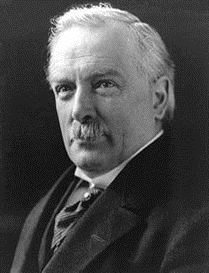
The British Medical Association (BMA, the doctors’ trade union) opposed the insurance scheme and threatened to boycott ‘panel’ medical service6, but it became a reality in January 1913, giving the working classes the first contributory medical insurance system. The 1911 National Health Insurance Act provided for the compulsory insurance of lower paid workers (with the government paying two-ninths of the fees7) and set a fixed capitation fee for doctors. And the standard means of record-keeping used in the practices – the ‘Lloyd George’ envelopes (which followed patients when they moved to a different panel or practice) – survived for over 100 years.

The GP was like a small shopkeeper8, usually running his own practice single-handed and relying mainly on the income from capitation fees of his insured patients. In some parts of the country there were Medical Aid Societies, into which working men paid a regular contribution so that they and their families were covered for GP services. These societies employed their own doctors, and in AJ Cronin’s 1937 novel ‘The Citadel’9, the idealistic Dr Manson works for one in the South Wales coalfield. Cronin had worked as a doctor for the Tredegar Medical Aid Society, which served as a model for the National Health Service. Indeed, the novel itself has been credited with laying the foundation for the introduction of the NHS on 5th July 1948.
The situation with GPs was far from ideal. A 1937 survey of healthcare in Britain commented that ‘It is disturbing to find large numbers of GP’s being taught at great trouble and expense to use modern diagnostic equipment, to know the available resources of medicine and to exercise judgement as between patient and specialist, only to be launched out into a system which too often will not permit them to do their job properly.’8
If the situation with GPs was bad, then so was that in the hospital sector, which comprised voluntary and municipal institutions run by local authorities. In many of the smaller voluntary hospitals it was GPs who carried out both medical and surgical procedures, with no check on their qualifications or competence for the job. The distribution of beds across the country was a result of historical accident, not based on any measure of need. Hospitals passed on responsibility for patients to each other: the voluntary hospitals regularly dumping chronic cases onto the municipal sector. The voluntary sector was not financially viable, but bankruptcy was staved off by the Second World War, when these hospitals received large government funds in return for preparing beds ready to receive war casualties.
During the war there was a consensus that something had to be done about the ‘muddle of health care’, and when people started thinking about solutions, they had in front of them two basic options. The first was the one advocated by the BMA which emphasised the right of individuals to medical care, based on purchasing the appropriate insurance entitlements; this was consistent with individualistic medical values and a professional ethos that saw medical care in terms of a transaction between the individual patient and the individual doctor. The second option emphasised the obligation of public authorities to make provision for the community at large and was consistent with a collectivist approach to the provision of health care.8
The second option won, and the NHS was established to provide free and universal services to everyone. At the time of its creation, it was a unique example of collectivist provision of healthcare in a market society. The NHS remained unique for almost twenty years until Sweden, a country usually considered as a pioneer in the provision of welfare, caught up. It was therefore inevitable that compromises would be made, one being the little-understood arrangement of GPs within the NHS.8
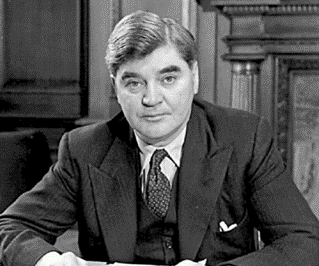
Following the election of a Labour Government in 1945, the Minister of Health who oversaw the creation of the NHS was Aneurin Bevan who had been a miner in South Wales before becoming MP in 1929 for Ebbw Vale (including Tredegar). He found it easier to arrive at an agreed solution for the hospitals (he nationalised them, but not under the responsibility of local authorities10) than for the GPs. It was issues involving GPs which aroused the fiercest passions and opposition between 1945 and 1948: so much so that the ability of Bevan to launch the NHS on the appointed day in July 1948 remained in doubt until almost the last month. The GPs were happy to accept the 1945 Conservative plan for maintaining Insurance Committees in the new incarnation of local Executive Committees (with a stronger representation for the medical profession than under the previous machinery), thus removing any threat of GPs becoming employees of the state or the local authority. But their suspicions were aroused by three other aspects of Bevan’s proposals. One: they did not want Health Centres to be provided by local authorities. Two: they did not want to be paid based on a mixture of part-time salaries and capitation fees (it was Bevan’s intention that there should be a full-time salaried medical service in due course). Three: they opposed the setting up of a central Medical Practices Committee which would have the power to prevent doctors from setting up in practice in areas which already had their fair share of GPs. In addition, the Labour Government proposed to prohibit the sale and purchase of practices, and to compensate existing general practitioners accordingly.8
A long-drawn-out battle between Bevan and the BMA followed, and in April 1948 – when it seemed that the opposition of the BMA would prevent the NHS from getting off the ground on the appointed day – Bevan made a dramatic concession. He made it clear that it was not his intention to create a whole-time, salaried service: GPs would continue to be paid on a capitation fee basis – and part-time salaries would be limited to new entrants to the profession for their first three years.8
And so, GPs remained independent business owners, a situation which – despite all the NHS reorganisations since 1948 – continues to this day. It was a long story, and my friend might think twice before asking me another question about why the NHS is organised like it is. But for those working in the NHS, understanding its history is not an optional extra. If we don’t know the origin of what we see every day, then how can we hope to effectively work in it and try to improve it.
Acknowledgement: I am grateful to Dr Alistair Blair, GP and medical director, for help with this article, but the views and any errors remain mine alone.
Note: The view and opinions expressed in this article are personal and are not necessarily those of Northumbria Healthcare NHSFT.
References
- https://www.kingsfund.org.uk/publications/gp-funding-and-contracts-explained
- Responsibility for commissioning primary care services, including general practice, sits formally with NHS England. However, overtime clinical commissioning groups (CCGs) have increasingly taken on full or partial delegation of these commissioning powers. This responsibility will, in future, pass to the Integrated Care Boards.
- https://alastairbeattie.org/2020/06/19/if-the-national-health-service-was-used-as-the-model-for-how-to-run-marks-and-spencer-what-would-their-stores-look-like-today/
- https://patients.econsult.health/
- https://digital.nhs.uk/data-and-information/data-collections-and-data-sets/data-collections/general-practice-data-for-planning-and-research
- Norman R Eder. Medical Opinion and the First Year of National Health Insurance in Britain. Albion: A Quarterly Journal Concerned with British Studies Vol. 11, No. 2 (Summer, 1979), pp. 157-171 (15 pages) Published By: The North American Conference on British Studies
- https://www.nationalarchives.gov.uk/cabinetpapers/themes/national-health-insurance.htm
- Rudolf Klein, The Politics of the National Health Service, Longman 1983
- AJ Cronin, The Citadel
- Regional Hospital Boards and local Hospital Management Committees were created
 The NHS: observations of an Information Specialist